

What to test
Changes that often result in the most significant changes in engagement include:Subject Line
Try different wording, length, or tone in your subject line.
Preview Text
Test what appears in the inbox preview to boost open rates.
Offer or Coupon
Compare different discount amounts or no discount at all.
Design or Layout
Test different layouts or visual styles.
Image
Try product images vs. lifestyle images, or image vs. no image.
Create an A/B Test
To start a new A/B Test:- Navigate to Campaigns.
- Click Create Campaign.
- Choose A/B Test Email.
- Name your test and click Continue.
Email Creation
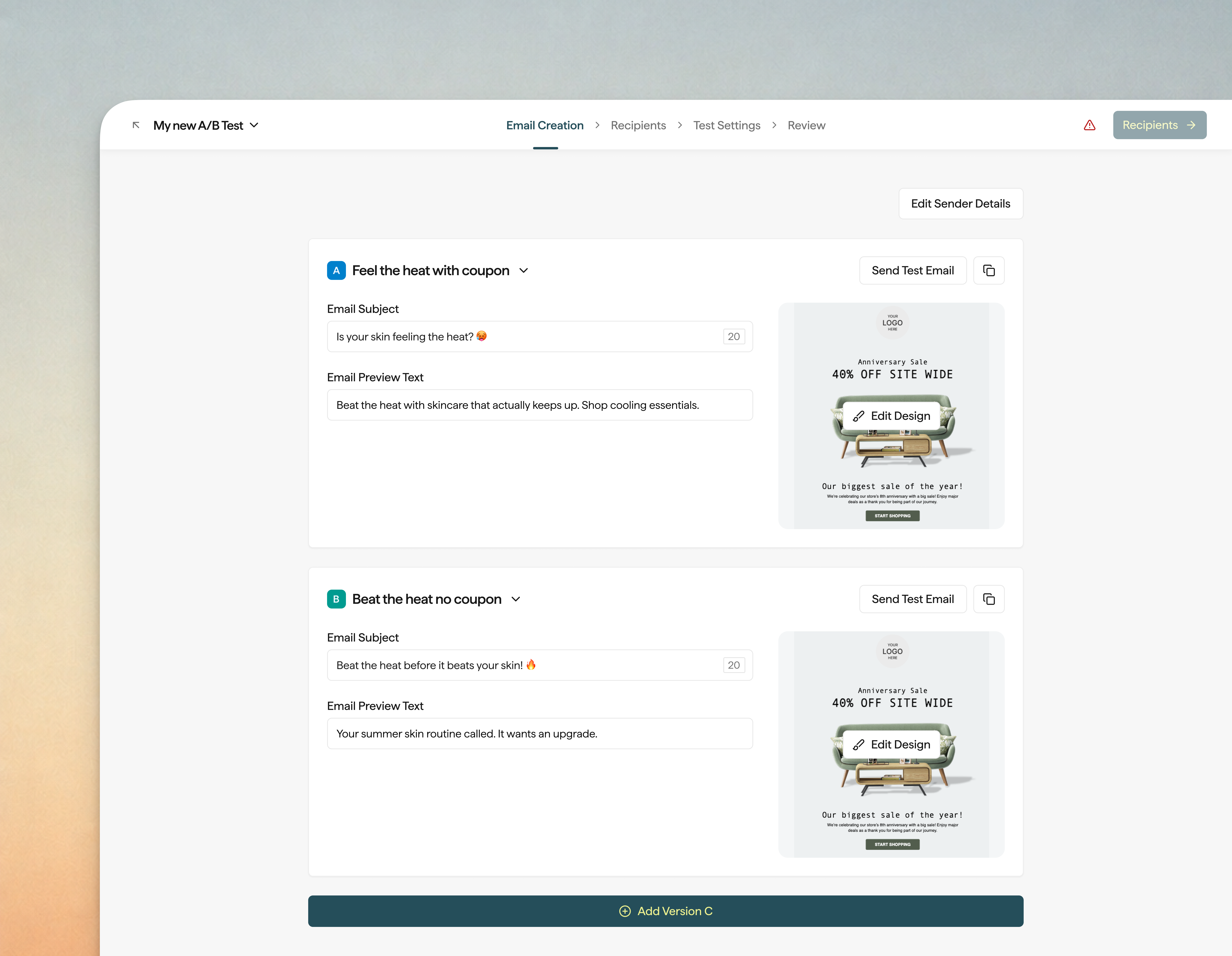
In the Email Creation tab, you’ll create 2 to 5 versions of your campaign. Version A is your control. It uses the campaign’s existing email. To add more versions:- Click Add Version to add Version B, C, D, or E.
- Give each version a Version Name for internal tracking.
- Customize each version’s Email Subject, Email Preview Text (Optional), and design using Edit Design.
- Use Send Test Email to preview how each version looks in your inbox.
Each version can have its own coupon. The coupon merge tag must be added to that version’s design.
Recipients
Select one or more segments to send your test to. You can also exclude a segment if needed. The audience is frozen when you send the test. Changes to your segments after sending won’t affect who receives the campaign.Test Settings
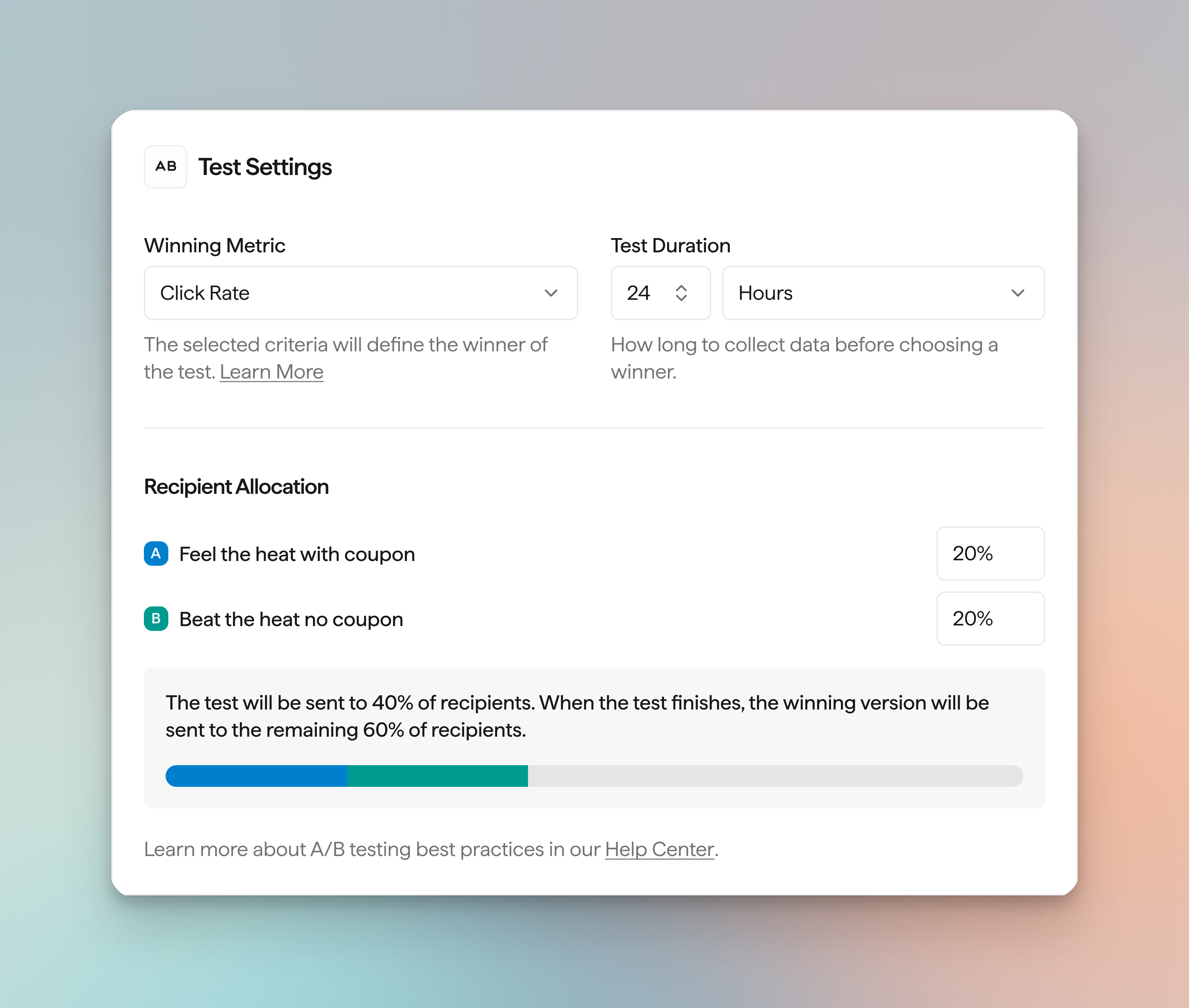
- Click Rate — The version with the highest percentage of clicks wins.
- Order Rate — The version with the highest percentage of orders wins.
Review and Send
The Review tab shows an overview of your test: number of versions, winning metric, test duration, and total recipients. When you’re ready:- Click Send to start the test immediately.
- Click Schedule to pick a future date and time for the test to start.
How the winner is chosen
Privy calculates a rate for each version:- Click Rate = clicks for that version ÷ emails delivered for that version
- Order Rate = orders for that version ÷ emails delivered for that version
Reporting
- Navigate to Campaigns.
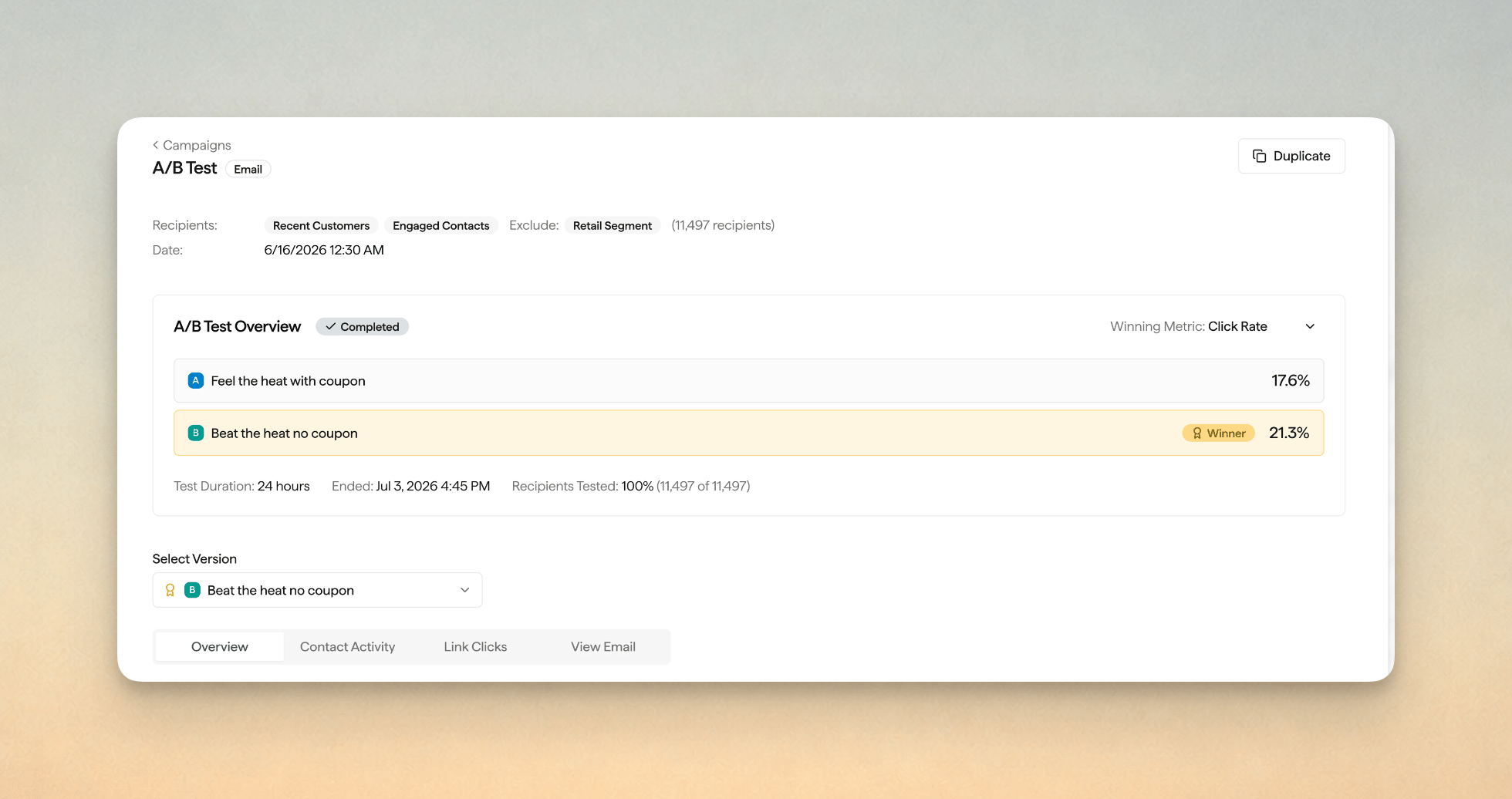
- Locate your test. A/B Test Email campaigns appear with A/B Test or Email A/B Test and show the version count.
- Click to open the campaign report.
- Live tests display Time Remaining and Recipients Tested So Far.
- Completed tests show Ended and Recipients Tested.
Later opens and clicks may change the live report numbers, but they do not change the winner. The winner is determined by data collected through the test deadline. See How the winner is chosen for details.
Tracking
Links in an A/B Test Email includeutm_content set to that version’s Version Name, so Google Analytics and other tools can separate Version A from Version B.
This happens automatically on A/B Test Emails:
- Each version’s links include
utm_contentwith that version’s Version Name. - Ordinary (non-A/B) campaigns and Flows do not include
utm_content.
Tips for reliable results
- Test one element at a time so you know what caused the difference.
- Allocate enough of your audience to each version. Very small percentages rarely produce a clear winner.
- Give your test enough time. Open and click behavior takes hours to unfold.
- Make sure each version’s design is complete before sending. You cannot edit versions after the test starts.